Instructions for SIOE 2026
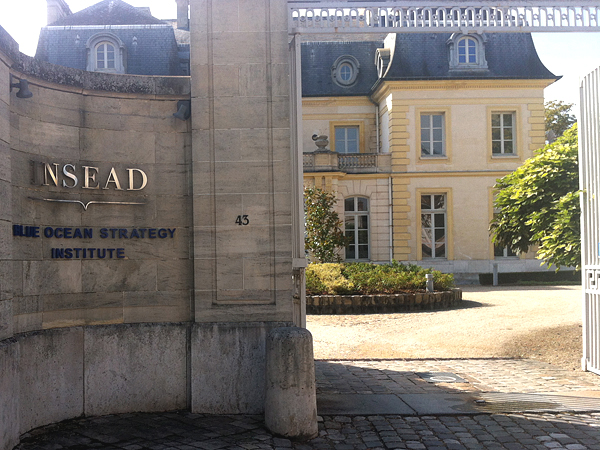
All talks will take place in the INSEAD Main Building.
Each session is allocated 1 hour and 30 minutes. Most sessions include four papers, while some include three. The available time should be divided equally among all presenters in the session. SIOE places great importance on strict adherence to time limits, so please plan your presentation accordingly.
Please bring your slides on a USB flash drive in either PDF or PowerPoint format. Make sure you arrive before the start of your session so that you can upload your presentation to the room computer. You may also connect your own laptop to the screen if you prefer.
Participants who do not have a USB flash drive may email their presentation during the conference to Ines Magnasco at ines.magnasco@insead.edu.
Your name may appear in the program as a session chair. In that case, you will be responsible for keeping time. Please arrive a few minutes early to help presenters upload their slides and ensure that the session starts promptly.
Technical support staff will circulate among the rooms. If you need assistance, look for colleagues wearing green T-shirts.
Have a great conference!
All times are shown in Paris time (CEST, UTC+2) · Underlined = presenting author
Monday, July 13
Board Meeting
Registration
Conference Opening
The SIOE at 30 Commemoration (Gary Libecap, Bob Gibbons, Pauline Grosjean) has been moved to Wednesday, July 15 at 15:45 in the Suddens amphitheatre.
Keynote Address #1
Ekaterina Zhuravskaya (PSE): The rise of mobile broadband and the fall of incumbency advantage
Reception
Tuesday, July 14
Registration
Parallel A
A1 AI, Markets, and Algorithmic Decisions
3 papers
A2 Bureaucracy, Policing, and State Capacity
4 papers
A3 China: State, Religion, and Long-Run Development
4 papers
A4 Conflict and Institutions in Historical Political Economy
4 papers
A5 Dynamic Models of Politics
4 papers
A6 Environment, Climate, and Firms
4 papers
Making a Difference? The Impact of Environmental NGO campaigns on Deforestation in Brazil
Fuel Prices and Carbon Emissions: The Role of Structured Management Practices
Learning with Economists in Petro-Rich Economies: Climate Change Policies in Russia
Green Regulation Through Climate Litigation: Empirical Evidence
A7 Institutional Trust and Electoral Accountability
4 papers
A8 Managers and Management Practices in Organizations
4 papers
A9 Politics of the Rule of Law
4 papers
Preferences for Formalization in the Artisanal and Small-Scale Gold Mining Sector: Evidence from a Conjoint in Peru's Madre de Dios Province
Where’s Coase? Transaction Costs Reduction or Rent-Seeking in Forming Institutions
Fragmenting Commercial Governance: The Political Economy of Place-Based Industrial Policy in Africa
Production Networks and Preferences for Property Rights
A10 Violence, Gender, and Identity
4 papers
Coercive Policies and the Persistence of Violence: Evidence from Male Sterilizations in India
Protecting LGBTQ* Social Spaces in 1950s and 1960s New York: Mafia vs Self-protection
The long-term effects of historical gender imbalances on children's educational achievement in Australia
Identity in Journalism: Evidence from News Reporting of Violence Against Women
Coffee Break
Parallel B
B1 AI, Technology, and Work
3 papers
B2 Cooperation in Organizations
4 papers
B3 Decentralized organizations
3 papers
B4 Economic Governance for Addressing Societal Issues
4 papers
Structural Power in Multinational Investments: A Matching Approach
STRATEGIES AT ENTRY OF FOR-PROFIT AND NON-PROFIT FIRMS IN PUBLIC SERVICES: INSIGHTS FROM PRIVATE HIGHER EDUCATION
NAVIGATING PHILANTHROPY ALLOCATION AMIDST CHANGE: BALANCING INSTITUTIONAL AND FIRM-LEVEL DRIVERS OF GIVING
LEVIATHAN AS A CLIENT: PUBLIC VERSUS PRIVATE PROMOTION OF DESALINATION TECHNOLOGIES TO ADDRESS WATER SCARCITY
B5 Firms, Power, and Politics
4 papers
B6 Gender in Organizations and Politics
4 papers
B7 Historical Roots of Inequality and Trust
4 papers
B8 Law, Legal Origins, and Regulatory Design
4 papers
B9 Power Games: Conflict, Division, and Control
4 papers
B10 State Formation, Borders, and Identity
3 papers
Lunch
Parallel C
C1 Autocracy, Corruption, and Democratic Survival
4 papers
Good Lord, Bad Democrat: When Effective Autocracy Undermines Civic Capacity
Labor Unions and Democratic Survival: unions won't be the “bulwark of democracy”
Bureaucratic Deliberation and Performance: Evidence from a Field Experiment in Benin
Fraud and Legitimacy: The Economics of Autocratic Elections
C2 Commitment, Enforcement, and Sovereign Risk
4 papers
C3 Firms, Workers, and Productivity
4 papers
C4 Geoeconomics
4 papers
C5 Governance of Interfirm Relationships
4 papers
C6 Impact of the Judiciary
4 papers
Political Appointments, Careers, and Performance in the Public Sector: Evidence from U.S. Federal Judges
Improving Judicial Protection in Intimate Partner Violence Cases: The Role of Specialized Courts and Judges
Does Rule of Law Enhance Growth? Evidence from Indian Judicial Appointments
The Institutional Role of the Italian Mafia: Enforcing Contracts When the State Does Not
C7 Knowledge, Persuasion, and Institutional Emergence
4 papers
C8 Salary regulation and workers’ sorting
4 papers
Salary Caps for Public Managers and Public Sector Performance
Buying Out the Means of Production: Wages and Productivity in Labor-Managed Firms
Local effects of regulation on income, unemployment, and inequality: Evidence from U.S. commuting zones over the past half-century
Mind the Cap? The effects of regulating bankers' pay
C9 The Economics of Working Environment
4 papers
Coffee Break
Parallel D
D1 Agency, Incentives, and Promotion
4 papers
D2 Anticorruption, Taxation, and Bureaucratic Reform
4 papers
D3 Cultural Consequences of Market Integration
4 papers
The Social Consequences of Technological Change: Evidence from U.S. Electrification and Immigrant Labor
Winning Stomachs and Minds: Ethnic Restaurants and Anti-Immigrant Sentiment in the US
How Market Access Shapes Wellbeing and Values: Experimental Evidence from the D.R. Congo
Doux Commerce: Markets, Culture, and Cooperation in 1850-1920 U.S.
D4 Designing Hybrid Governance: The Architecture of Formal and Relational Contracts
4 papers
Enforcement without Courts? Combining Formal and Relational Contract Governance
Coalitions and Recurrent Negotiation in Multilateral Relational Contracts
Alternate Strategies for Incomplete Public Contracting - Assessing Cost Effectiveness
Dual Anchors in the Shadow of the Future: How Renewal Expectations and Relational History Govern Behavior in Public Contracts
D5 Human capital and training in organizations
4 papers
D6 Improving the Judiciary
4 papers
D7 Procurement, Competition, and Market Structure
4 papers
Beneath the Surface: Investigating Anti-Competitive Signals in Brazilian Public Procurement
Can Protective Tariffs Induce Industrial Consolidations? Theory and Evidence from the Great Merger Movement
Uniform Pricing, Demand Shocks, and Organizational Form: Evidence from the Hotel Industry
Contract Shifting vs. Contract Splitting in Public Procurement
D8 Public Services and Policy Reform
3 papers
D9 Ronald Coase Institute session : Elite Incentives, Networks, and Violence
4 papers
Cycles of Nepotism: How Electoral Incentives and Political Connections Undermine Public Procurement
Oligarchs and Geopolitical Realignment: Evidence from the Russo-Ukrainian War
Banking on Family: Do Family Ownership Networks Matter for the Survival of Russian Banks?
Corporate Dark Money in Politics: Evidence from India
Keynote Address #2 - Introduction by Mark Stabile (INSEAD, Dean of DP and Stone Center Co-director)
Mattia Fochesato (Bocconi): Long Run Wealth and Income Inequality
Bastille Day Dinner
Wednesday, July 15
Parallel E
E1 AI in Private and Public Law
3 papers
E2 Contracts, Cooperation, and Property Rights
4 papers
E3 Corporate Foundations in Flux: The Transformation of Voting, M&A Contracting, and Investment Funds
3 papers
E4 Institutions, Authority, and Governance
4 papers
E5 Management Practices and Productivity
4 papers
E6 Media, Narratives, and Political Behavior
3 papers
E7 Organizational Design and Culture
4 papers
E8 Political Institutions, Economic Competition, and Repression
4 papers
E9 Relational Contracts and Firm Boundaries
4 papers
Coffee Break
Plenary Panel: “Organizing for Societal Change”
Jenna Bednar — Professor of Political Science, University of Michigan
Sylvain Guyoton — Chief Rating Officer, EcoVadis
Ilze Kivleniece — Associate Professor of Strategy, INSEAD
Char Love — Global Ambassador, Natura
Moderator: Katell Le Goulven, INSEAD
Lunch
Parallel F
F1 Colonial and pre-Colonial Organizations in Africa
4 papers
F2 Beyond Assumptions: Leveraging Belief and Preference Measurement for Organizational Outcomes
4 papers
F3 Firm Networks: Evidence from Developing Countries
4 papers
Buyers’ Sourcing Strategies and Working Conditions in Bangladeshi Garments
Firm Networks and Tax Compliance: Experimental Evidence from Uganda
How do floods change international supply chains: Evidence from Uganda
Direct and Spillover Effects of a Business Support Program: Evidence from a Randomized Experiment
F4 Firms, Industrial Policy, and Performance
4 papers
F5 Formal and Informal Norms of Conducts
4 papers
F6 Gender in organizations
4 papers
F7 Labor, Migration, and Regulation
3 papers
F8 Managing Workers: Supervision, Hiring, and Productivity
4 papers
F9 State-building, inequality and markets in historical perspective
4 papers
Coffee Break
SIOE at 30 Commemoration
Gary Libecap, Bob Gibbons, Pauline Grosjean
Presidential Address
Pauline Grosjean (UNSW)
Business Meeting & Awards Ceremony
Gala Reception